Authors: Krista Macaulay & Lindsay Harris 


In January 2022, the provincial Agricultural Land Commission denied an application from Tranquille on the Lake to remove ~51 ha from the Agricultural Land Reserve for a housing development. This decision was welcomed by the Kamloops Food Policy Council, who had advocated against the proposal due to the loss of agricultural lands, expected harm to a sensitive ecosystem, and lack of acknowledgement for an important Secwepemc cultural heritage site. 


The KFPC envisions a local food system that is regenerative, sovereign, and just. This means we advocate for development policies that protect agricultural lands and support the food security of our community. However, Kamloops is also in a severe housing crisis, and the lack of available, affordable housing is causing many families to struggle to put food on the table. 


Unlimited growth, a mindset with deep roots in imperialism and colonialism, can lead to the devastating destruction of valuable agricultural land, sprawling expensive neighbourhoods, and car-dependent cities. Growth for the sake of growth isn’t automatically good. Yet, stopping all growth is a major contributing factor to our current housing crisis. Low development, NIMBYism, and zoning constraints have caused a dangerously low vacancy rate and disasteriously limited housing inventory. 


What would  “good growth” look like in Kamloops? Growth that is resilient, compassionate, and smart can help us thrive. Growth that focuses on the needs, desires, and intrictities of our community can help us become a better place – unlike growth that focuses on building as many luxury homes as possible in a quarter.

Where do we grow from here?

The KFPC is advocating for policies and action from housing developers and local government that encourages the right type of growth that preserves our local food system and supports the distinctive needs of our community. More inclusive and economically savvy development – such as infill, multi-family, housing cooperatives and affordable rental housing units in our pre-existing neighbourhoods – are essential to increasing our low supply and meeting Kamloops’ current housing gaps. Housing that is net-zero, resilient to heat domes and flooding, and doesn’t expand the wildland-urban interface even further is equally important. Ensuring the right type of development is key to fostering the resilient long term health of Kamloops. 


Let’s continue this discussion!


The Kamloops Food Policy Council will be launching a series on food and the city to explore a number of deeper civic discussions leading up to our municipal election. As the late urban planner and Canadian food advocate Wayne Roberts wrote, “food is a lever.” Food is how we connect to the land, our communities, and our traditions. And because food is so impactful in all our lives, it is a useful lever through which we can create transformative changes in other areas. Strong local food systems can help us get to more affordable housing, walkable neighbourhoods, stronger local economies, spaces for safety and belonging, and more. 

You can read our full discussion on the topic of growth and sustainability on our website: www.kamloopsfoodpolicycouncil.com/growth-and-sustainability where you can also subscribe to stay in the loop about our food and the city policy series!

Authors: Krista Macaulay & Lindsay Harris

Fall is often a time of transition and change. Just as the weather shifts and the trees around us begin to shed their leaves, so do our lives and daily structures alter and adapt. Schedules become more rigid with kids back to school and vacations coming to an end. Shorts and sandals go back in the closet, while coats and toques come out with the crisp morning air. Berry season closes out for the great pumpkin king’s arrival. With so much change in the air, it feels fitting that our municipal elections happen in fall.

While municipal elections do not receive the same attention as federal or provincial elections, they are the best way that individuals can bring change to their communities and everyday life. Our school trustees, council, and mayor make decisions that affect our schools, our community services, and city plans. Local government is the true key to actionable change for Kamloops.

At the Kamloops Food Policy Council, we have brought together members of our network to form a policy advocacy group leading up to fall’s municipal election. This Food and the City group has been collaborating on areas of change for our city. Using food as a lens to explore relevant civic issues and food as a lever for transformative social change, the Food and the City group has created a number of powerful discussions and policy recommendations. As Andrea Magarini and Andrea Calori of the book “Food and the Cities” write:

“Food is a fundamental component of a city that is inseparable from citizens’ basic rights and needs, individual lifestyles and cultures, the socio-economic structure, and the city’s relationship with the surrounding environment . . . These trends go well beyond the need to feed cities, calling into question our perspectives on how to think about cities as a whole.”

Food is how we connect and engage with the land, our community, our traditions, and each other. Because food impacts all areas of our lives, it can act as a lever through which we can create transformative changes! At the Kamloops Food Policy Council, we know that strong local food systems can help us get to more affordable housing, walkable neighbourhoods, stronger local economics, spaces for safety and belonging and more!

The Food and the City group has endeavoured over the past 4 months, creating 7 in-depth blog posts on key topics. Through much research, discussion, and collaborative writing we have produced the following posts and subsequent policy recommendations (in no particular order):

  1. Sustainable Development & Affordable Housing
  2. Public Spaces & the Commons
  3. Planning for People, Not Cars
  4. Healthy Ecosystems & Pesticide Use
  5. Community Safety 
  6. Decolonizing the Municipality
  7. Community Food Security

Each post can be found on our webpage: www.kamloopsfoodpolicycouncil.com/food-and-the-city and includes an in-depth analysis of the topic with policy recommendations for our current and future leaders! These recommendations provide key directions for positive growth, change, and development in all areas of life for Kamloopsians.

The Food and the City Group also speaks to the ability of citizens to participate in elections in their city. So often it can feel like we are disconnected from our municipal government and the decisions that take place in City Hall. This project seeks to display that advocacy matters and citizens can participate in municipal elections beyond pencilling in their candidates of choice. Whether it is those who have joined the Food and the City Group to research and write on specific issues, or those from our wider network who came together to help create communications material and spread the word!  On the evening of Tuesday September 13, we hosted a DIY Flyer Making Event to create awareness of the project and craft some fun posters to share around our community! This project has truly been an exciting example of how citizens – such as you and I – can participate in a deeper way in municipal elections.

Volunteers creating art around the 7 Food and the City topics.

Together we can create positive change. Together we can build community and partnerships that advocate for a stronger, happier, healthier, and more resilient Kamloops! 

Be sure to check out our list of topics and recommendations: www.kamloopsfoodpolicycouncil.com/food-and-the-city

If you want to get involved in developing and implementing policy with us, or if you’re a local government candidate and want to support any of these policies in your platform or to discuss further, please reach out to us: lindsay@tapestryevaluation.com


Info for Evacuees


Food Resources for Wildfire Evacuees in Kamloops

Evacuees in need of free of meals and food can see our Kamloops Emergency Food Resources and Community Meal Calendar.


ESS Information for Evacuees

If you do not require ESS assistance, you do not need to visit a reception centre. In many cases, home or tenant insurance provides greater support than what is available through ESS, so be sure to speak with your insurance representative to see what is available to you.

If you do require ESS assistance for shelter, food or incidentals, you must visit a reception centre to apply and complete an eligibility interview. Registering online is not enough.

To qualify for ESS support, your primary residence must be located within an evacuation order area. People evacuated from vacation rentals or owners of secondary residences in the evacuation order area are not eligible to receive ESS assistance.

To speed up processing for ESS, register online at https://ess.gov.bc.ca/ and download and activate the BC Services Card App from Google Play or the Apple App Store to receive supports via etransfer once you’ve been processed.

For Animals

B.C. wildfire evacuees that are in need of emergency boarding for your animals can contact the BC SPCA Animal Helpline at 1-855-622-7722.

The wildfire situation continues to change at a rapid pace. For the most up to date information, visit BCWildfire.ca


How to Help


We understand that everyone want to help evacuees, but please do not walk-up to ESS reception centres to volunteer – this prevents ESS Volunteers from doing their jobs. ESS volunteers must have specific training, course work, and police checks, which cannot be done on site. If you are interested in volunteering, register at Kamloops.ca/ESSVolunteer – you will be contacted about volunteer training opportunities as capacity allows.

Folks are also ask not to bring donations of any kind to ESS reception centres. Volunteers do not have the capacity to sort through and distribute donations. Instead, make a financial donation online at uwbc.ca/campaign/wildfires or spca.bc.ca/bc-wildfire-animal-support/ – and please do not donate food! Some ESS centres are experiencing an overwhelming amount of perishable food donations.

For the most up-to date information on the wildfire situation and how you can help, visit BCWildfire.ca


Have you seen what’s Stirring outside our new food hub? A collection of benches, native plants, and a community pantry have popped up outside The Stir, 185 Royal Ave – and we need your help to keep this space functional for our community to enjoy!

The Stir is looking for folks who want to adopt care-taking tasks for the community pantry or parklet. This adoption doesn’t require a big time commitment or a certain schedule; whenever you have time to come take a peek in the pantry, dust its shelves, and make sure no one has accidentally left a perishable item inside will help us maintain the integrity of this pantry. You can also choose to bring your own non-perishables to put inside the pantry, or help acquire non-perishable donations from other folks and organizations in our community! 

Task you can adopt on your daily walk past The Stir, include:

  • Picking up garbage you see in the Parklet and/or inside the pantry
  • Sweeping the Pavement mural
  • Wiping down the benches 
  • Ensuring there are no perishables in the pantry and that its shelves are clean
  • Donating non-perishable items to the pantry

Some of these tasks require equipment that we may be able to provide if staff are onsite. We recommend Parklet Adopters come with their own cleaning supplies if they’re in the mood for a deeper cleaning day! 

Want to learn more about our Public Parklet and its role in our community? Read our Connector Column on it!

Questions? Emails us info@kamloopsfoodpolicycouncil.com

When I go to the grocery store these days, I am really feeling the pinch. I’m glad I planted a big garden this year! I know that I’m not alone in noticing how expensive my grocery bill is. The cost of groceries is increasing rapidly, putting many more families at risk of experiencing household food insecurity. 

KFPC Food Policy Implementation Lead, Lindsay Harris, wears a yellow sweater in front of a lilac bush.

Author: Lindsay Harris, Food Policy Implementation Lead

It’s not just food prices that are skyrocketing – housing affordability is also in a major crisis in Kamloops. Kamloops’s population is quickly outpacing its housing supply, and families are being priced out of the market. According to Zumper.com, the average cost of new studio and one bedroom apartments in Kamloops more than doubled between 2016 and 2023, with average rents now at $1600/mo and $1750/mo, respectively. Our population is growing more quickly than projected, and our inventory and community vacancy rates are at critically low levels. We know we are in desperate need of more housing supply.


There is a clear link between household food insecurity and the high cost of housing. One of our core organizational values at the KFPC is “Alleviation of Poverty” because we understand that we will not be able to meaningfully address household food insecurity without also addressing the conditions of poverty more broadly. 


Last fall, the KFPC published a series of municipal policy recommendations called Food and the City, including one recommendation to build more cooperative housing to increase the affordability of housing. Cooperative housing is widely recognized as an important category of affordable housing, yet in recent years Kamloops has had no organization working toward building this type of housing. But we’ve heard the buzz that a new organization in Kamloops is stepping forward to lead this solution! 


Propolis Cooperative Housing Society is a non-profit housing cooperative, with a goal to create affordable, durable, and green homes that will enrich the vibrant neighbourhoods in the heart of Kamloops. 

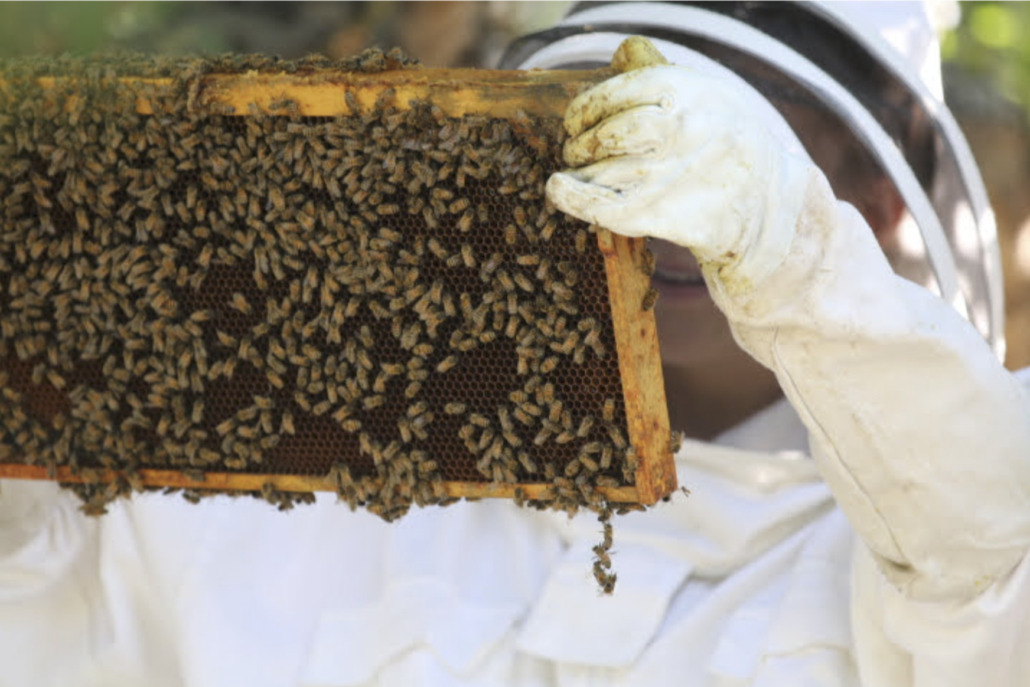
A frame from a bee hive is covered in bees and honey, being held by a person in a white bee keeping suit.

Like bee propolis, which bees use to seal cracks in their hive, Propolis Cooperative Housing Society envisions a community in which no one falls through the cracks.

Propolis recently announced that they are in the planning stages for their first building project: a six-storey mixed-use development, located at the corner of Aspen and Tranquille, which will provide 50 affordable residential housing units. It will have commercial space for a daycare and a theatre on the ground floor, and it will even have rooftop gardens!


Propolis has taken an innovative approach to funding the purchase of the land for this project. They are raising capital through a community bond campaign, so that everyone in the community can contribute to developing affordable housing, while earning returns. It is a unique and inclusive opportunity for all residents to play an active role in addressing the housing challenges we all face. Investment minimums are as low as $1,000 and investors will earn up to 3.5% interest annually while supporting a vibrant future for Kamloops.


If we want to improve food security in our community, we need to make progress on the affordability of our housing too. The KFPC is looking forward to working in partnership with Propolis to build a community where nobody falls through the cracks. 


If you want to learn more about Propolis, their housing project, and how you can invest in a Propolis Bond, you can check out their website at https://www.propoliscooperative.com/bond-campaign.